Selling a waterfront home on Camano Island can feel simple on the surface: list the view, show the beach access, and wait for the right buyer. In reality, waterfront sales usually reward the owners who prepare early, organize key property details, and avoid last-minute surprises. If you want to protect value and make your sale smoother, a smart pre-listing plan can help. Let’s dive in.
Why preparation matters on Camano Island
Camano Island remains a high-value market, but homes are not flying off the shelf overnight. Zillow estimated the island’s average home value at $715,870 as of February 28, 2026, and reported that homes were going pending in about 73 days. Zillow also showed a median list price of $858,992, while Trulia’s 98282 trend page reflected a similar median home value of $714,865 in February 2026, which points to a market where presentation and pricing discipline matter.
When buyers are considering a waterfront property, they tend to look closely at both lifestyle and risk. They may love the sunsets, shoreline access, and outdoor spaces, but they also want confidence in the home’s systems, records, and upkeep. That is why getting ahead of the details before you list can make a meaningful difference.
Start with the property records
A waterfront home often has more documentation than an inland property. Before your home goes live, it helps to gather records for repairs, improvements, and shoreline-related features so buyers have a clearer picture of what they are purchasing.
Focus first on the items buyers are most likely to ask about. That can include permits and repair records for docks, bulkheads, stairs, or other shoreline structures, along with paperwork for septic, water service, and major maintenance work. Having this information ready can reduce friction once your listing attracts serious interest.
Documents to collect early
- Septic inspection and maintenance records
- Well-water test results, if the property uses a private well
- Permits and repair records for docks, bulkheads, stairs, and shoreline improvements
- Records for major repairs or replacements tied to the house or site
- Notes on any planned work that may require county review
Check septic and water requirements
On Camano Island, septic and water paperwork should move to the top of your list. According to Island County’s on-site sewage system FAQ, a property served by an on-site sewage system is due for inspection at the time of sale if no inspection has been completed within the most recent compliance period.
The county states that conventional gravity systems are inspected every 3 years, while pressure and alternative systems are inspected annually. The same county guidance also notes that documented maintenance helps preserve property value, which is a practical reason to schedule service early rather than waiting until you are under contract.
If your home has a private well, water testing may also come into play. The Washington State Department of Health says that in many counties, the county health or planning department, or a lender, may require water-sampling results when a home with a private well is being bought or sold. Ordering testing in advance can help you avoid delays later.
Review shoreline rules before doing cleanup
Many sellers want to freshen up the view before listing. That instinct makes sense, but shoreline properties require extra care because not every trimming, clearing, or repair project is simple.
Washington Ecology explains that Shoreline Master Programs are local land-use policies and regulations that guide shoreline use. On Camano Island, Island County states that maintenance of existing, legally established residential landscaping is allowed, but if buffer vegetation has been removed or a site is redeveloped, new vegetation rules can apply.
The county also notes that normal maintenance and repair of existing lawful structures is allowed, though a shoreline exemption permit will likely be required, and replacements must remain comparable to the original while avoiding substantial adverse shoreline impacts. In plain terms, that means even well-intended pre-sale work may need review.
Avoid common pre-listing mistakes
- Clearing too much vegetation to improve the view
- Starting bluff, stair, or shoreline work without confirming county requirements
- Replacing shoreline structures without matching original scope and function
- Advertising planned improvements before verifying whether review or permits are needed
Understand why vegetation matters
View corridors are valuable, but shoreline vegetation plays an important role too. Island County notes that shoreline buffers can help stabilize slopes, screen adjacent development, provide habitat, and block noise and glare.
For sellers, this matters in two ways. First, aggressive clearing can create compliance issues. Second, natural shoreline presentation can actually support the way buyers experience the property, especially when the setting feels stable, cared for, and consistent with the site.
Use Shore Friendly as a pre-listing resource
If your lot includes a bluff, drainage concerns, visible erosion, or a beach path, a pre-listing check can be worthwhile. Island County’s Shore Friendly Program offers free, non-regulatory site visits for shoreline owners.
The program specifically addresses erosion, vegetation management, drainage, king tides, sea-level-rise preparation, and structure relocation. For a seller, that can be a useful way to better understand site conditions before marketing begins, especially if buyers are likely to ask detailed questions about long-term shoreline stewardship.
Focus on the outdoor experience
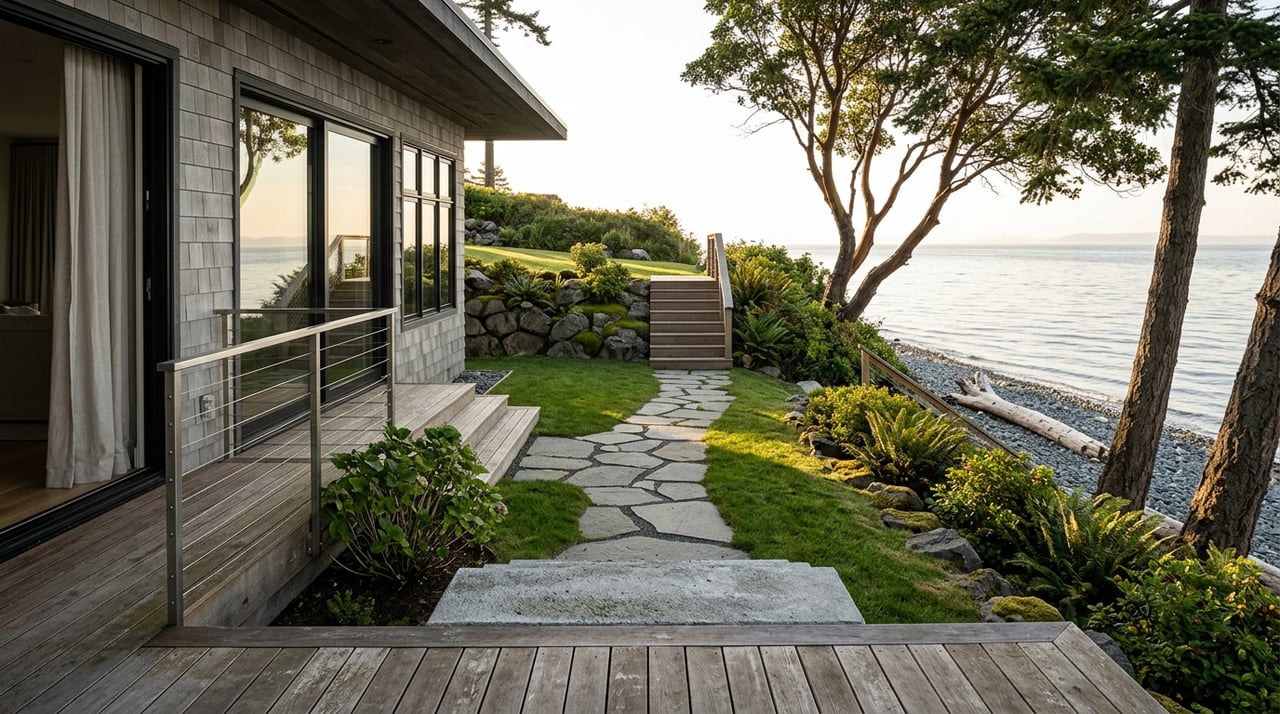
With waterfront homes, outdoor presentation is part of the sale. Buyers are often imagining how they will move through the property, from the driveway to the deck to the shoreline access path.
That means practical cleanup can have a real payoff. Cleaning paths, shoreline access, and outdoor storage areas can make the property feel easier to use and easier to maintain. Small improvements in flow and tidiness can help buyers focus on the setting rather than deferred chores.
High-impact exterior tasks
- Clear and tidy shoreline access paths
- Organize or remove outdoor storage clutter
- Clean decks, railings, and view-facing windows
- Refresh beach access areas where appropriate
- Confirm that any repair or trim work is reviewed before starting, if needed
Plan listing media around the season
Great waterfront marketing depends on timing as much as talent. On Camano Island, local climate data supports planning exterior cleanup, photography, and video when conditions are more predictable.
At the Camano Island 4.2 NNE CoCoRaHS station, NOAA normals reported through CoCoRaHS show about 0.90 inches of rain in July and 1.00 inch in August, compared with 3.69 inches in January and 4.41 inches in November. Those numbers suggest late spring through summer is often the easiest window for exterior preparation and shoreline visuals.
If you are targeting a future listing date, try not to leave photography and repairs until the last minute. Since Camano homes may take time to go pending, it often makes sense to build in lead time for property prep, media, and document collection before the home hits the market.
Price and present with discipline
Waterfront sellers sometimes assume a rare setting will do all the work. The reality is that even special properties benefit from careful pricing, polished presentation, and strong documentation.
The local market data suggests buyers still compare value closely. When your home is clean, well-documented, and visually ready, it becomes easier for buyers to focus on what makes your property distinct, whether that is shoreline access, expansive views, privacy, or a well-maintained coastal site.
Create a smoother sale from day one
The best pre-listing plan is not about doing everything. It is about doing the right things in the right order so your sale feels controlled instead of rushed.
For many Camano Island waterfront owners, that means starting with records, septic and water checks, shoreline review, and outdoor presentation. From there, thoughtful pricing and premium marketing can do their job more effectively.
If you are thinking about selling and want a calm, concierge-style plan tailored to your property, Julie Love can help you prepare your Camano Island waterfront home for market with local insight, careful guidance, and premium presentation.
FAQs
What should you do first before selling a Camano Island waterfront home?
- Start by gathering property records, septic documents, water information, and any permits or repair records tied to shoreline features or major improvements.
Does a Camano Island home with septic need an inspection before sale?
- Yes, according to Island County, a home with an on-site sewage system is due for inspection at the time of sale if it has not been inspected within the current compliance period.
Can you clear vegetation to improve views at a Camano Island waterfront property?
- Maybe, but shoreline properties are subject to local shoreline rules, and removing buffer vegetation or changing site conditions can trigger additional requirements.
What is the Shore Friendly Program for Camano Island sellers?
- It is an Island County program that offers free, non-regulatory site visits for shoreline owners to discuss issues such as erosion, drainage, vegetation management, king tides, and structure relocation.
When is the best time to photograph a Camano Island waterfront home?
- Late spring through summer is often the easiest time for exterior cleanup and shoreline media because local rainfall normals are lower than in fall and winter.
Why does pre-listing preparation matter in the Camano Island market?
- With homes taking around 73 days to go pending based on Zillow data, early preparation can help your property show better, reduce surprises, and support a smoother transaction.